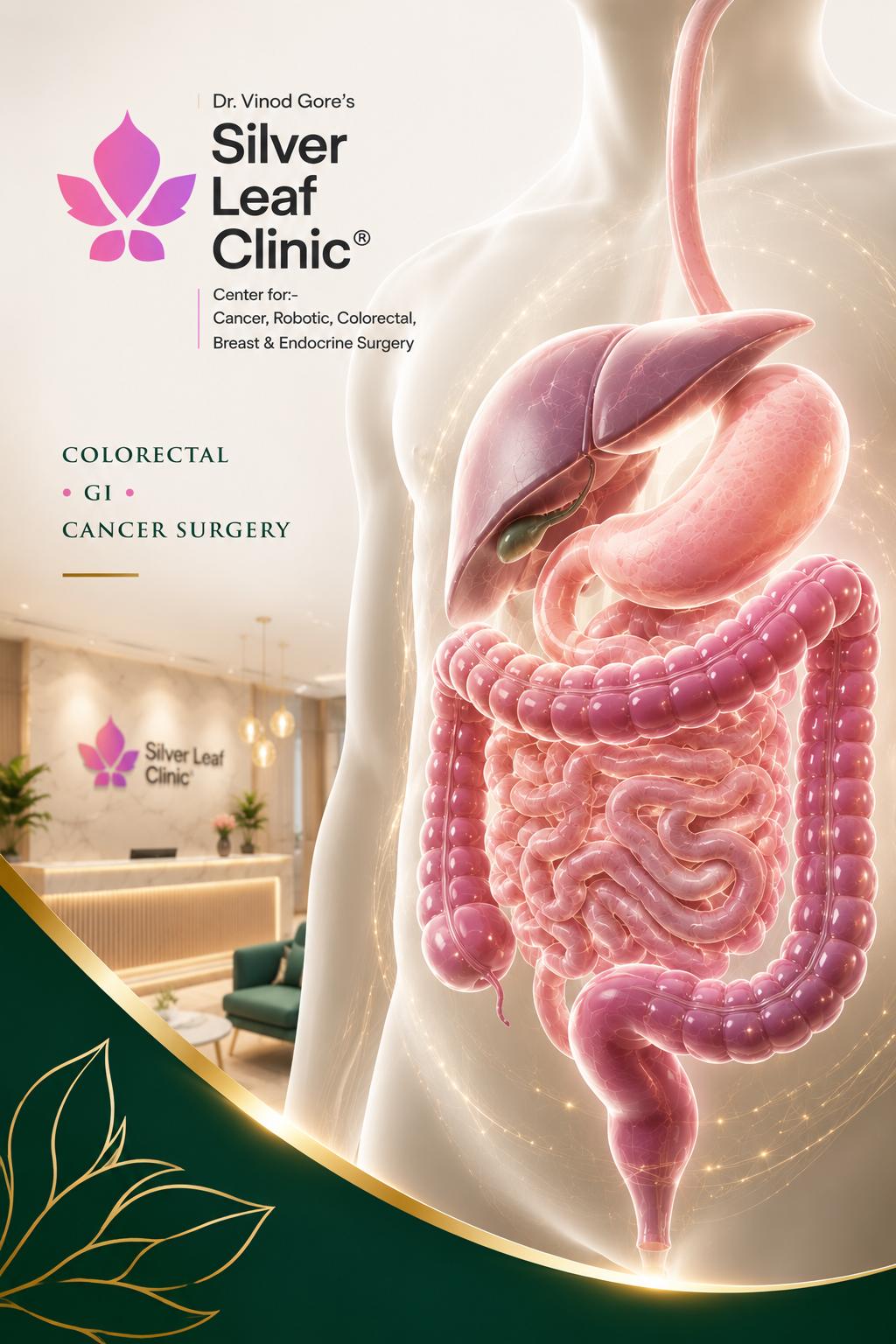
For cancers of the colon, rectum and digestive tract, the right operation does more than remove the tumour — it protects your function and quality of life. With 30+ years, 11,000+ cancer surgeries and 300+ robotic procedures, Dr. Gore helps most rectal cancer patients avoid a permanent colostomy through robotic, sphincter-preserving surgery.
Dr. Gore manages the full range of gastrointestinal and colorectal cancers — each with a treatment plan agreed at the multidisciplinary tumour board.
From robotic minimal-access surgery to complex open resections and HIPEC — the approach is chosen to give you the best oncological and functional outcome.
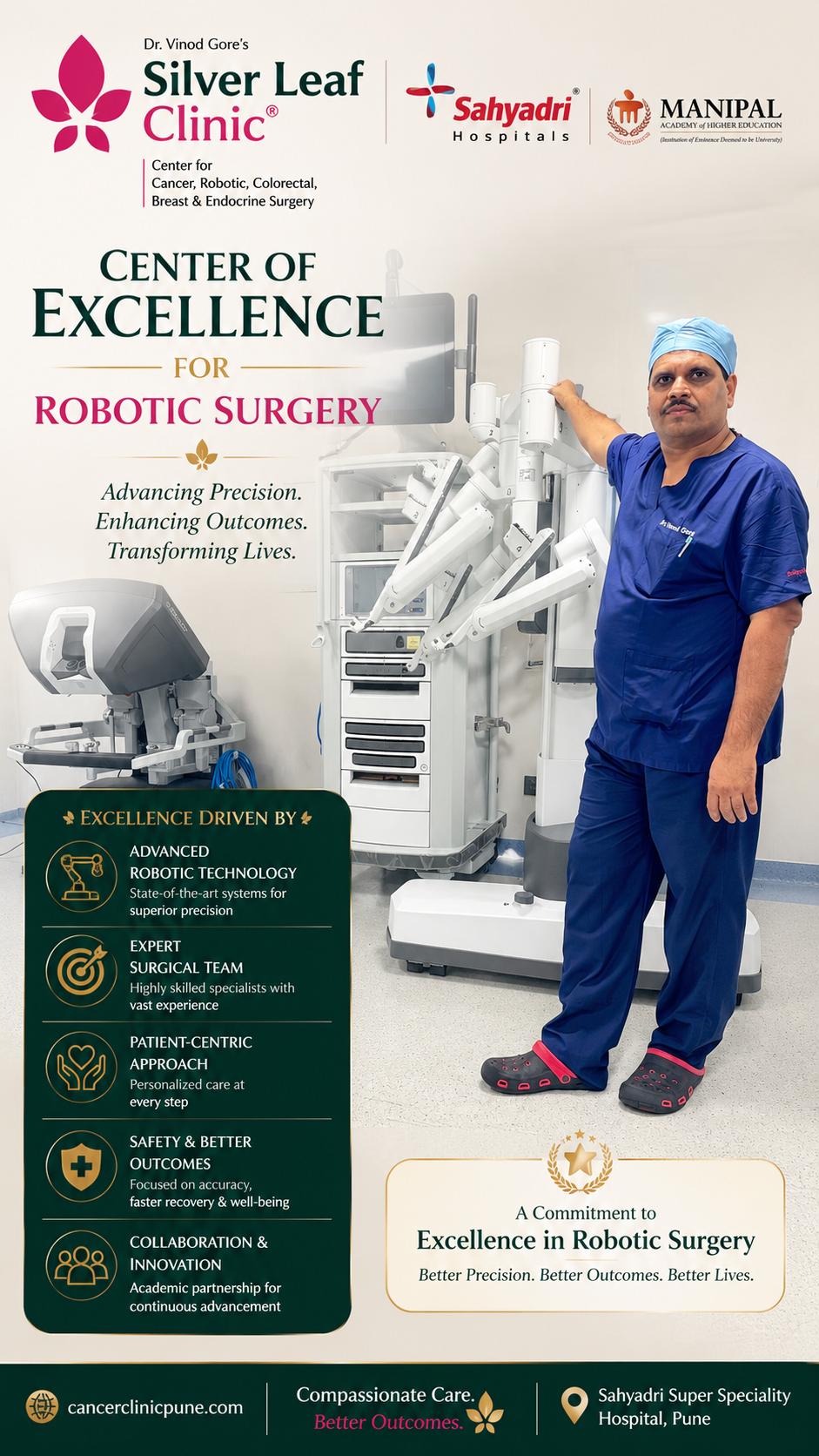
For cancers deep in the pelvis and abdomen, the da Vinci Xi robot gives 3D magnified vision and fully-wristed instruments — allowing nerve-sparing, sphincter-preserving surgery that open operations often cannot achieve.
Clear, reliable information for patients and families — videos, articles, answers to common questions, and key facts at a glance.
In most cases, no. Through robotic sphincter-preserving surgery (LAR or ISR), the majority of rectal cancer patients keep natural bowel function. A temporary ileostomy may be used for 2–3 months and then reversed. A permanent stoma is only needed when the tumour directly involves the sphincter.
Surgery performed using the da Vinci Xi system, where the surgeon controls fully-wristed instruments with 3D magnified vision. It allows greater precision in confined spaces such as the pelvis — improving nerve preservation and recovery.
Once staging is complete, most patients can be operated within a few weeks. Every case is first reviewed at the multidisciplinary tumour board to confirm the best plan.
Your scans (MRI/CT), biopsy/histopathology report, and any previous medical records. Dr. Gore reviews everything personally and explains your options clearly.
Yes. Many patients come for a second opinion before deciding on treatment. You are welcome to bring your existing reports for an honest review.
Founding Head of Surgical Oncology at Sahyadri Manipal Hospital and Director of Silver Leaf Clinic, Dr. Gore trained for five years at Tata Memorial Hospital, Mumbai. Over three decades he has performed more than 11,000 cancer surgeries, pioneered Asia’s first electrochemotherapy, and earned the FARIS robotic fellowship from the University of Edinburgh.
Recognised as a Trailblazer in Oncology by the Economic Times (2025) and Best Robotic Oncosurgeon by Navbharat Times (2024).
Bring your scans, biopsy and previous reports. Dr. Gore reviews everything personally and explains every option open to you — including all sphincter-preservation possibilities.