A Step-by-Step Guide · टप्प्याटप्प्याने मार्गदर्शक · क़दम-दर-क़दम मार्गदर्शिका
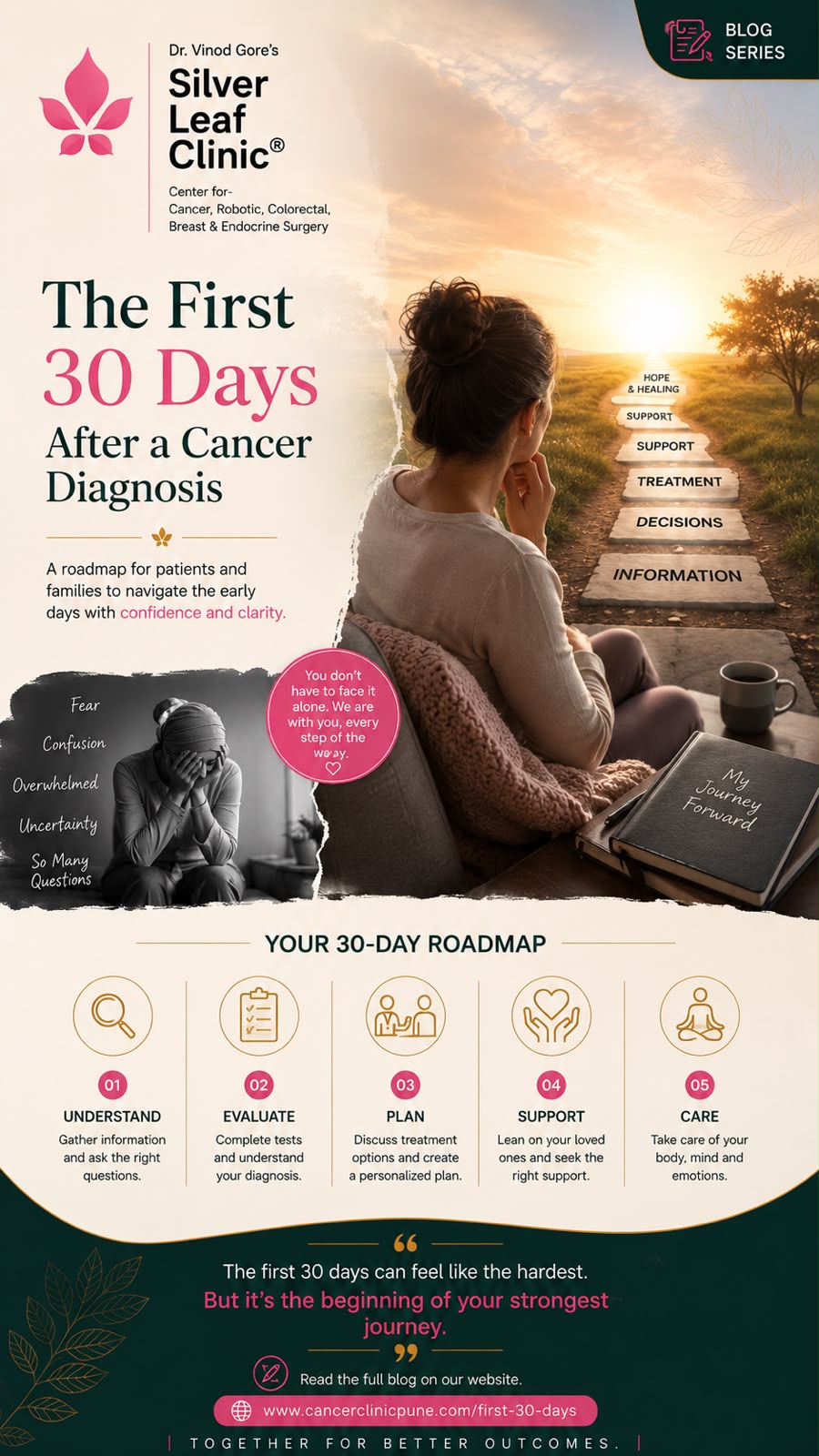
The world tilts when you hear the word. Your mind goes quiet, then loud. You cannot remember what the doctor said next. This guide is what I wish I could hand to every patient in that moment — calm, practical, week by week through the most overwhelming month of your life.
📖
Reading Time
14 minutes
📅
Published
June 2025
👥
Written For
Patients & Families
⏳
From
30+ Years Experience
VG
Dr. Vinod T. Gore
Senior Surgical Oncologist · Silver Leaf Clinic, Hadapsar, Pune
First, breathe. You are still here. You have time. Almost no cancer needs deciding in a day — and the calm you find now will carry the whole journey.
If you are reading this with hands that shake — or for someone you love whose hands are shaking — know that I have sat across from your version of this moment thousands of times. The first hours after hearing the word "cancer" are among the most disorienting of any life. You hear half-sentences. You forget what was said next. You feel calm one moment and breathless the next. That is not weakness; it is a human heart meeting something enormous.
What thirty years of guiding families has taught me is this: the next thirty days will shape your entire treatment journey, and the decisions you make now matter far more than the speed at which you make them. Almost no cancer needs treatment within 24 hours. Almost all benefit from a clear, structured first month. This is that month — slowly, step by step.
What just happened — and what hasn't
Hearing the word "cancer" feels like hearing a verdict. It is not. It is the start of a process. In modern medicine the single word "cancer" covers hundreds of distinct diseases with very different behaviours and outcomes — some slow and curable, some needing only watchful care, a small few demanding urgent action.
You almost certainly do not yet know which one you have. The biopsy names the type; the scans reveal the stage; together they shape the plan and the outlook. Until all three are known, no real treatment decision can be made — and anyone urging you to decide within 48 hours is either mistaken about your case or rushing you for the wrong reasons.
What I tell my patients
In all but a handful of emergencies — heavy bleeding, obstruction, breathing trouble — cancer treatment can safely wait two to four weeks while we gather information properly. A well-planned operation four weeks from now is far better than a rushed operation tomorrow.
The first 72 hours — what NOT to do
Before what to do, here is what to gently avoid in the first shock:
Don't make irreversible decisions — selling property, quitting work, signing big papers under pressure. They will be clearer in two weeks.
Don't search "cancer survival rate" at 2 a.m. Those numbers are averages across millions of different patients; they almost never describe you, and they frighten out of all proportion.
Don't accept the first plan without a second opinion — even excellent doctors can miss an alternative another specialist sees easily.
Don't tell everyone at once — information shared cannot be unshared. You control the timing and the audience.
Don't stop your regular medicines — diabetes, blood pressure, thyroid must stay controlled.
Don't be brave entirely alone — tell at least one person who can come to appointments. Two ears hear more than one.
⚠️ True emergencies that DO need same-day care
Heavy bleeding from any source
Inability to pass urine or stool
Sudden severe breathlessness
Severe, uncontrolled pain
Yellowing of the eyes with high fever
1
Days 1–7
Gather Your Facts
Information is the antidote to fear. Your single most important document this week is the biopsy report — the pathology paper that names your specific cancer. Get a clear, complete copy, and ask the doctor or lab to explain each section. But the biopsy alone is not enough; your full picture needs staging — finding where the cancer is, and is not. This usually means a CT scan of the relevant region, often a PET-CT for whole-body assessment, sometimes an MRI (for rectal, pelvic or liver disease), and blood tests including the tumour markers for your cancer. Treating without staging is like operating blindfolded.
What you need by Day 7
The complete biopsy report (the original, not a verbal summary)
All scan films and reports in original form (CDs or PACS links)
Blood results, including tumour markers and a full blood count
Old medical records — previous scans, surgeries, illnesses
A current medication list with doses
Family history of cancer, especially close relatives
One trusted family member to accompany you
A simple notebook for questions and answers
2
Days 8–14
Build Your Team
Choosing the right cancer team is more consequential than choosing between any two treatments. Two patients with identical cancers can have very different outcomes depending on who treats them. Modern cancer care is multidisciplinary — for most solid cancers the core team is a surgical oncologist (who often leads the plan), a medical oncologist (chemotherapy, targeted and immunotherapy) and a radiation oncologist, supported by the pathologist and radiologist. The gold standard is for your case to be discussed in a Tumour Board — surgeons, oncologists, radiologists and pathologists agreeing the best plan together.
What I tell my patients
Every cancer patient deserves the brain-power of an entire team, not a single doctor. Ask plainly: "Will my case be discussed in a Tumour Board?" If the answer is no, you may be in the wrong place.
Five questions that tell a good team from an average one
How many patients with my specific cancer do you treat each year?
Will my case be discussed in a multidisciplinary Tumour Board?
What is your recommendation — and what are the alternatives?
What is your complication and readmission rate for this surgery?
Is there anything about my case that makes you uncertain, or suggests a specialist referral?
And seek a second opinion before any major cancer surgery. In my own practice, roughly one in five patients who come for a second opinion leaves with a meaningfully different plan — a different operation, a different sequence, or the recognition that "inoperable" elsewhere is in fact operable. A second opinion is never an insult to the first doctor; good doctors welcome it. If a doctor is offended that you want one before major surgery, that itself is information.
3
Days 15–21
Understand Your Cancer
By the third week you should have the full picture — biopsy, stage, scans, blood work — and can move from "I have cancer" to understanding which cancer, at what stage. Staging uses the TNM system: T for the tumour, N for lymph nodes, M for distant spread, combining into stages I to IV. Broadly: Stage I is small and contained, often cured by surgery alone; Stage II is larger or with limited local spread; Stage III involves nearby lymph nodes and usually needs combined treatment; Stage IV has spread to distant organs.
Please hold on to this: Stage IV does not automatically mean "untreatable" or "terminal." Many Stage IV cancers respond beautifully to modern treatment, and patients live for years — sometimes decades — with disease that is controlled rather than cured. "Stage" describes anatomical extent, not your destiny.
What I tell my patients
Statistics describe what happens to populations. They do not predict what happens to you. Your treatment, your fitness, your spirit, your team — all of these change your individual path. I have seen "incurable" patients live for decades, and apparently easy cases turn difficult. Numbers are a guide, not a sentence.
4
Days 22–30
Decide & Begin
By the fourth week, you should be ready to make and begin the plan. You have your biopsy, scans, team, ideally a second opinion that confirms or refines the plan, and a clear understanding of your cancer. In the treatment-planning conversation, make sure these are clear: what treatment is recommended and in what order; whether the goal is cure, long-term control or relief of symptoms; the likely side effects and how they'll be managed; the expected timeline; the total estimated cost and what insurance covers; the follow-up afterwards; and the warning signs that need urgent attention during treatment.
Before treatment begins
The treatment plan written down — order, drugs, doses, schedule
A fitness assessment — heart, lungs, kidney function
A financial plan — insurance pre-authorisation, payment arrangements
A nutritional check — protein, weight, correcting anaemia if needed
A dental check if chemotherapy is planned (prevents later infections)
A fertility consultation if you are young and chemotherapy is planned
A caregiver identified for the recovery period, and a work/leave plan
The emotional journey — what nobody warns you about
The information is the easier part. The feelings of these thirty days are what most patients are least prepared for. Some honest things I have seen over thirty years: grief comes in waves — calm and capable one hour, devastated the next; this is normal, and the waves grow smaller. Sleep is often disturbed — tell your doctor, short-term help is reasonable. Relationships shift — some you expected to be present disappear, some you barely knew become deep supports; this usually reflects each person's relationship with mortality, not with you. And faith and meaning often deepen — not as denial, but as one of the genuine gifts of facing something this large.
Cancer is never carried by the patient alone. How the family responds — what they say, what they do, how they steady themselves — shapes recovery as much as any medicine. I made this short film for the families who ask me, "Doctor, what should we do?"
Watch: Cancer Recovery Needs Family Support — What Relatives Should Do
Telling family — and especially children — is one of the hardest tasks of this month. Children sense distress even when they don't hear the words; age-appropriate honesty, delivered calmly, helps them far more than protective silence. How we break this news, to a spouse, a parent, a child, changes how a whole family carries it. I made this film about exactly that — how to share the news with love, without breaking the heart that hears it.
Watch: Breaking News, Breaking Hearts — How to Share a Cancer Diagnosis
If hopelessness, loss of pleasure or withdrawal persist
Ask your team for a psycho-oncology referral. Cancer hospitals have trained counsellors. Seeking this support is not weakness — it is wisdom, and patients who receive it measurably do better.
Money — the conversation that has to happen
Cancer treatment in India ranges from completely free (government schemes, charitable hospitals) to several lakh rupees (premium private care, robotic surgery, immunotherapy). Hiding from this conversation worsens outcomes; facing it early reduces stress. Do three things this month: understand your insurance (ask specifically about cancer cover, robotic surgery, chemotherapy, pre-existing clauses, limits and cashless hospitals); get a written cost estimate from your team covering surgery, chemotherapy, radiation, stay and follow-up; and identify gap-funding — government schemes (Ayushman Bharat, Mahatma Phule Jan Arogya Yojana in Maharashtra), employer benefits, charitable trusts. Most families use a combination.
Living your life through all this
The treatment plan is the medical journey. Living is the other journey — the one only you can walk. Keep some routine, even small: a morning walk, tea made the same way, the newspaper; routine tells the nervous system that life still has structure. Give yourself permission to laugh — watch comedies, sit with funny people; humour does not deny the reality, it survives alongside it. Stay gently active within medical limits. Let nutrition, not expensive bottled supplements, do the work — protein, fruit and vegetables, water. And receive the kindness offered: when people ask "can I do anything?", say yes, and name something small — groceries on Wednesday, a lift to chemotherapy, one cooked meal a week.
What I tell my patients
The patients who do best are not the toughest or the most relentlessly positive — they are the most engaged. The ones who ask questions, follow the plan, accept help and stay connected. You don't have to "fight" cancer like a war. You have to participate, carefully, in your own treatment. That is plenty.
The Day 30 reflection
If you have walked these four weeks well, by day thirty you should have: a complete diagnostic picture; a clear written treatment plan agreed by a multidisciplinary team; a second opinion that supports it; a financial pathway; a support network identified; and ideally treatment already begun or scheduled within days. You should also have a calmer mind than on day one — not because the situation is less serious, but because you understand it and hold a plan.
This is what I tell every newly diagnosed patient: the first thirty days are about gathering, not rushing. The treatment that follows may take months or years, but it will be better, safer and more effective because you took these four weeks to do it right. The world tilted when you heard the word. Step by step, this is how it steadies again.
You don't have to walk this month alone
Dr. Gore has guided thousands of newly diagnosed patients through their first month and beyond, bringing thirty years of cancer surgery and a multidisciplinary team approach. Whether you need a complete treatment plan, or a second opinion on one you already have, an in-person or video consultation can be arranged at Silver Leaf Clinic, Hadapsar.
About the author: Dr. Vinod T. Gore is a Senior Surgical Oncologist with over 30 years of experience guiding patients and families through cancer diagnosis and treatment. Trained at Tata Memorial Hospital, Mumbai and FARIS (Edinburgh). Department Head of Surgical Oncology at Sahyadri Manipal Hospital; practises at Silver Leaf Clinic, Hadapsar, Pune.
Correspondence: Silver Leaf Clinic, 511 City Centre, Solapur Road, Opp. Vaibhav Theatre, Hadapsar, Pune 411028 · ☎ 88558 10010
This article is for education and emotional support. It does not replace consultation with your treating doctor. Every cancer case is individual; please make medical decisions with a qualified surgical oncologist who knows your full case.
आधी, श्वास घ्या. तुम्ही अजून इथे आहात. तुमच्याकडे वेळ आहे. जवळजवळ कोणताही कर्करोग एका दिवसात ठरवण्याची गरज नसते — आणि आता मिळवलेला हा संयम संपूर्ण प्रवासाला आधार देईल.
तुम्ही हे कदाचित थरथरत्या हातांनी वाचत असाल — किंवा ज्याचे हात थरथरत आहेत अशा एखाद्या प्रियजनासाठी. तसे असेल, तर एवढे जाणून घ्या: तुमच्या या क्षणाच्या असंख्य रूपांसमोर मी हजारो वेळा बसलो आहे. "कर्करोग" हा शब्द ऐकल्यानंतरचे पहिले काही तास कोणत्याही आयुष्यातील सर्वात गोंधळवणारे असतात. तुम्हाला अर्धवट वाक्ये ऐकू येतात. पुढे काय बोलले गेले ते विसरता. एका क्षणी शांत वाटते, दुसऱ्या क्षणी श्वास कोंडतो. ही दुर्बलता नाही; हे एका प्रचंड गोष्टीला सामोरे जाणारे माणसाचे हृदय आहे.
कुटुंबांना मार्गदर्शन करण्याच्या तीस वर्षांनी मला हे शिकवले आहे: पुढचे तीस दिवस तुमचा संपूर्ण उपचार प्रवास घडवतील, आणि आता घेतलेले निर्णय ते किती वेगाने घेता यापेक्षा कितीतरी अधिक महत्त्वाचे आहेत. जवळजवळ कोणत्याही कर्करोगाला २४ तासांत उपचाराची गरज नसते. जवळजवळ सर्वांना एक स्पष्ट, सुनियोजित पहिला महिना फायद्याचा ठरतो. हा तोच महिना — सावकाश, टप्प्याटप्प्याने.
आत्ता काय घडले — आणि काय घडले नाही
"कर्करोग" हा शब्द ऐकणे एखाद्या निकालासारखे वाटते — जणू न्यायाधीशाने शिक्षा सुनावली. पण तो निकाल नाही. ती एका वाटेची सुरुवात आहे. आधुनिक वैद्यकशास्त्रात "कर्करोग" हा एकच शब्द शेकडो वेगवेगळ्या आजारांना आपल्या पदराखाली घेतो, आणि त्या प्रत्येकाचा स्वभाव व शेवट निराळा असतो — काही नदीसारखे संथ व बरे होणारे, काहींना फक्त शांत नजरेची गरज, तर काही मोजकेच वादळासारखे, ज्यांना तातडीने सामोरे जावे लागते.
तुम्हाला अजून जवळजवळ नक्कीच माहीत नाही की तुम्हाला कोणता आहे. बायोप्सी प्रकार सांगते; स्कॅन टप्पा दाखवतात; दोघे मिळून योजना व पुढची दिशा ठरवतात. हे तिन्ही कळेपर्यंत कोणताही खरा उपचार निर्णय घेता येत नाही — आणि तुम्हाला ४८ तासांत ठरवण्याची घाई करणारा कोणीही एकतर तुमच्या केसबद्दल चुकत आहे किंवा चुकीच्या कारणांनी घाई करत आहे.
मी माझ्या रुग्णांना काय सांगतो
मोजक्या आपत्कालीन परिस्थिती वगळता — जोरदार रक्तस्राव, अडथळा, श्वासाचा त्रास — आम्ही नीट माहिती गोळा करेपर्यंत कर्करोगाचा उपचार दोन ते चार आठवडे सुरक्षितपणे थांबू शकतो. आजपासून चार आठवड्यांनी केलेली सुनियोजित शस्त्रक्रिया, उद्या घाईने केलेल्या शस्त्रक्रियेपेक्षा कितीतरी चांगली असते.
पहिले ७२ तास — काय करू नये
काय करावे यापूर्वी, सुरुवातीच्या धक्क्यात हळुवारपणे काय टाळावे ते पाहा:
अपरिवर्तनीय निर्णय घेऊ नका — मालमत्ता विकणे, नोकरी सोडणे, दबावाखाली मोठी कागदपत्रे करणे. दोन आठवड्यांत हे अधिक स्पष्ट होईल.
रात्री २ वाजता "कर्करोग जगण्याचा दर" शोधू नका. ते आकडे लाखो वेगळ्या रुग्णांचे सरासरी आहेत; ते जवळजवळ कधीच तुमचे वर्णन करत नाहीत आणि प्रमाणाबाहेर घाबरवतात.
दुसऱ्या मताशिवाय पहिली योजना स्वीकारू नका — उत्तम डॉक्टरही असा पर्याय चुकवू शकतात जो दुसऱ्या तज्ज्ञाला सहज दिसतो.
सर्वांना एकदम सांगू नका — एकदा सांगितलेली माहिती परत घेता येत नाही. वेळ व श्रोते तुमच्या नियंत्रणात ठेवा.
तुमची नियमित औषधे बंद करू नका — मधुमेह, रक्तदाब, थायरॉईड नियंत्रणात राहिले पाहिजेत.
पूर्णपणे एकट्याने धीराचे सोंग करू नका — अपॉइंटमेंटला सोबत येऊ शकेल अशा किमान एका व्यक्तीला सांगा. दोन कान एकापेक्षा अधिक ऐकतात.
⚠️ खऱ्या आपत्कालीन परिस्थिती ज्यांना त्याच दिवशी उपचार हवा
कोणत्याही स्रोतातून जोरदार रक्तस्राव
लघवी किंवा शौचास न होणे
अचानक तीव्र श्वासाचा त्रास
तीव्र, अनियंत्रित वेदना
डोळे पिवळे होणे व जास्त ताप
१
दिवस १–७
तुमची माहिती गोळा करा
भीतीवर जगातले सर्वात प्रभावी औषध म्हणजे माहिती. अंधारात भीती मोठी होते; प्रकाश पडताच ती आकुंचते. या आठवड्यातील तुमचे सर्वात महत्त्वाचे कागदपत्र म्हणजे बायोप्सी अहवाल — तुमच्या विशिष्ट कर्करोगाचे नाव सांगणारा पॅथॉलॉजी अहवाल. त्याची स्पष्ट, संपूर्ण प्रत मिळवा, आणि डॉक्टर किंवा प्रयोगशाळेला प्रत्येक भाग समजावून सांगायला सांगा. पण फक्त बायोप्सी पुरेशी नाही; तुमच्या संपूर्ण चित्रासाठी स्टेजिंग हवे — कर्करोग कुठे आहे व कुठे नाही हे शोधणे. यासाठी सहसा संबंधित भागाचा CT स्कॅन, अनेकदा संपूर्ण शरीराच्या मूल्यांकनासाठी PET-CT, कधी MRI (गुदाशय, ओटीपोट किंवा यकृतासाठी), आणि तुमच्या कर्करोगाच्या ट्यूमर मार्करसह रक्त तपासण्या लागतात. स्टेजिंगशिवाय उपचार करणे म्हणजे डोळ्यांवर पट्टी बांधून शस्त्रक्रिया करण्यासारखे.
७ व्या दिवसापर्यंत काय हवे
संपूर्ण बायोप्सी अहवाल (मूळ, तोंडी सारांश नव्हे)
सर्व स्कॅन फिल्म व अहवाल मूळ स्वरूपात (CD किंवा PACS लिंक)
ट्यूमर मार्कर व संपूर्ण रक्तगणनेसह रक्त तपासण्या
जुने वैद्यकीय अहवाल — पूर्वीचे स्कॅन, शस्त्रक्रिया, आजार
मात्रांसह सध्याच्या औषधांची यादी
कर्करोगाचा कौटुंबिक इतिहास, विशेषतः जवळचे नातेवाईक
सोबत येण्यासाठी एक विश्वासू कुटुंबीय
प्रश्न व उत्तरांसाठी एक साधी वही
२
दिवस ८–१४
तुमची टीम तयार करा
योग्य कर्करोग टीम निवडणे हे कोणत्याही दोन उपचारांमधून निवडण्यापेक्षा अधिक परिणामकारक आहे. एकसारखा कर्करोग असलेल्या दोन रुग्णांचे परिणाम, त्यांच्यावर कोण उपचार करते यानुसार खूप वेगळे असू शकतात. आधुनिक कर्करोग उपचार बहुविद्याशाखीय असतो — बहुतेक घन कर्करोगांसाठी मुख्य टीम म्हणजे सर्जिकल ऑन्कोलॉजिस्ट (जो अनेकदा योजनेचे नेतृत्व करतो), मेडिकल ऑन्कोलॉजिस्ट (केमोथेरपी, टार्गेटेड व इम्युनोथेरपी) आणि रेडिएशन ऑन्कोलॉजिस्ट, यांना पॅथॉलॉजिस्ट व रेडिओलॉजिस्ट यांचा आधार असतो. सर्वोत्तम पद्धत म्हणजे तुमची केस ट्यूमर बोर्डमध्ये चर्चिली जाणे — सर्जन, ऑन्कोलॉजिस्ट, रेडिओलॉजिस्ट व पॅथॉलॉजिस्ट एकत्र सर्वोत्तम योजना ठरवतात.
मी माझ्या रुग्णांना काय सांगतो
प्रत्येक कर्करोग रुग्ण एका संपूर्ण टीमच्या बुद्धिमत्तेस पात्र आहे, एकट्या डॉक्टरला नव्हे. स्पष्टपणे विचारा: "माझी केस ट्यूमर बोर्डमध्ये चर्चिली जाईल का?" उत्तर 'नाही' असेल, तर कदाचित तुम्ही चुकीच्या ठिकाणी आहात.
चांगली टीम सामान्य टीमपासून वेगळी दाखवणारे पाच प्रश्न
माझ्या विशिष्ट कर्करोगाच्या किती रुग्णांवर तुम्ही दरवर्षी उपचार करता?
माझी केस बहुविद्याशाखीय ट्यूमर बोर्डमध्ये चर्चिली जाईल का?
तुमची शिफारस काय आहे — आणि पर्याय कोणते?
या शस्त्रक्रियेसाठी तुमचा गुंतागुंत व पुनःभरतीचा दर किती?
माझ्या केसमध्ये असे काही आहे का जे तुम्हाला अनिश्चित करते किंवा तज्ज्ञाकडे पाठवण्याची शिफारस करते?
आणि कोणत्याही मोठ्या कर्करोग शस्त्रक्रियेपूर्वी दुसरे मत घ्या. माझ्या स्वतःच्या प्रॅक्टिसमध्ये, दुसऱ्या मतासाठी येणाऱ्या जवळजवळ पाचपैकी एका रुग्णाला लक्षणीयरीत्या वेगळी योजना मिळते — वेगळी शस्त्रक्रिया, वेगळा क्रम, किंवा इतरत्र "अशक्य" म्हटलेले प्रत्यक्षात शक्य असल्याची जाणीव. दुसरे मत हे पहिल्या डॉक्टरचा अपमान कधीच नसते; चांगले डॉक्टर त्याचे स्वागत करतात. मोठ्या शस्त्रक्रियेपूर्वी तुम्हाला दुसरे मत हवे म्हणून डॉक्टर नाराज होत असेल, तर तीच एक माहिती आहे.
३
दिवस १५–२१
तुमचा कर्करोग समजून घ्या
तिसऱ्या आठवड्यापर्यंत तुमच्याकडे संपूर्ण चित्र असावे — बायोप्सी, टप्पा, स्कॅन, रक्त तपासण्या — आणि तुम्ही "मला कर्करोग आहे" यापासून कोणता कर्करोग, कोणत्या टप्प्यावर हे समजण्याकडे जाऊ शकता. स्टेजिंग TNM प्रणाली वापरते: T ट्यूमरसाठी, N लसिका ग्रंथींसाठी, M दूरवर पसरण्यासाठी, जे I ते IV टप्प्यांत एकत्र होतात. ढोबळमानाने: टप्पा I लहान व मर्यादित, अनेकदा फक्त शस्त्रक्रियेने बरा; टप्पा II मोठा किंवा मर्यादित स्थानिक प्रसार; टप्पा III जवळच्या लसिका ग्रंथींपर्यंत, सहसा एकत्रित उपचार लागतो; टप्पा IV दूरच्या अवयवांपर्यंत पसरलेला.
कृपया हे हृदयाशी धरून ठेवा: टप्पा IV म्हणजे आपोआप "उपचार अशक्य" किंवा "अंतिम" नव्हे. अनेक टप्पा IV कर्करोग आधुनिक उपचारांपुढे नम्र होतात, आणि रुग्ण वर्षानुवर्षे — कधी दशकेही — आजाराला सोबत घेऊन, पण त्याच्या ताब्यात न जाता, भरभरून जगतात. "टप्पा" हा फक्त नकाशावरील रेषा आहे — शरीरात आजार कुठवर पोहोचला एवढेच तो सांगतो; तो तुमचे प्राक्तन लिहीत नाही.
मी माझ्या रुग्णांना काय सांगतो
आकडेवारी समूहांचे काय होते ते सांगते. तुमचे काय होईल ते ती सांगत नाही. तुमचा उपचार, तुमची तंदुरुस्ती, तुमचे मनोबल, तुमची टीम — हे सर्व तुमचा वैयक्तिक मार्ग बदलतात. "बरे न होणारे" रुग्ण दशके जगताना, आणि सोपे वाटणारे कठीण होताना मी पाहिले आहे. आकडे मार्गदर्शक आहेत, शिक्षा नव्हे.
४
दिवस २२–३०
ठरवा व सुरुवात करा
चौथ्या आठवड्यापर्यंत तुम्ही योजना ठरवून सुरू करण्यास तयार असावे. तुमच्याकडे बायोप्सी, स्कॅन, टीम, आदर्शतः योजनेला पुष्टी देणारे किंवा सुधारणारे दुसरे मत, आणि तुमच्या कर्करोगाची स्पष्ट समज आहे. उपचार-नियोजन चर्चेत या गोष्टी स्पष्ट करा: कोणता उपचार व कोणत्या क्रमाने शिफारस केला आहे; ध्येय बरे करणे, दीर्घकालीन नियंत्रण की लक्षणांपासून आराम आहे का; संभाव्य दुष्परिणाम व ते कसे हाताळले जातील; अपेक्षित कालावधी; एकूण अंदाजे खर्च व विमा काय भरतो; नंतरचा फॉलो-अप; आणि उपचारादरम्यान तातडीची गरज दर्शवणारी धोक्याची लक्षणे.
उपचार सुरू होण्यापूर्वी
लिहून ठेवलेली उपचार योजना — क्रम, औषधे, मात्रा, वेळापत्रक
तंदुरुस्ती मूल्यांकन — हृदय, फुफ्फुसे, मूत्रपिंडाचे कार्य
आर्थिक योजना — विमा पूर्व-मंजुरी, पेमेंटची व्यवस्था
पोषण तपासणी — प्रथिने, वजन, गरज असल्यास रक्तक्षय दुरुस्ती
केमोथेरपी नियोजित असल्यास दंत तपासणी (नंतरचे संसर्ग टाळते)
तरुण असाल व केमोथेरपी नियोजित असेल तर प्रजनन सल्ला
बरे होण्याच्या काळासाठी काळजीवाहक निश्चित करा व कामाची/रजेची योजना
भावनिक प्रवास — ज्याबद्दल कोणी सावध करत नाही
माहिती हा या प्रवासातला सोपा भाग आहे. खरी कसोटी या तीस दिवसांच्या भावनांची असते — आणि नेमक्या याच भागासाठी बहुतेक रुग्ण सर्वात कमी तयार असतात. तीस वर्षांत पाहिलेल्या काही प्रामाणिक गोष्टी: दुःख लाटांमध्ये येते — एका तासात शांत व सक्षम, दुसऱ्या तासात उद्ध्वस्त; हे सामान्य आहे, आणि लाटा लहान होत जातात. झोप अनेकदा बिघडते — डॉक्टरांना सांगा, अल्पकालीन मदत योग्य आहे. नातेसंबंध बदलतात — जे हमखास सोबत असतील असे वाटले होते ते कधी दूर सरकतात, आणि जेमतेम ओळखीचे काही अनपेक्षितपणे खांद्याला खांदा लावून उभे राहतात; हे बहुधा त्या व्यक्तीच्या स्वतःच्या मृत्यूविषयीच्या भीतीचे प्रतिबिंब असते, तुमच्याविषयीच्या भावनेचे नव्हे. आणि श्रद्धा व अर्थ अनेकदा अधिक खोल होतात — नकार म्हणून नव्हे, तर इतक्या मोठ्या गोष्टीला सामोरे जाण्यातून मिळणाऱ्या खऱ्या देणग्यांपैकी एक म्हणून.
कर्करोगाचे ओझे रुग्ण कधीच एकट्याने वाहत नाही — ते अख्खे कुटुंब मिळून पेलते. कुटुंब कसा प्रतिसाद देते — काय बोलते, काय करते, स्वतःला कसे सावरते — हे कोणत्याही औषधाइतकेच, कधी त्याहूनही अधिक, बरे होण्याला आकार देते. "डॉक्टर, आम्ही काय करावे?" असे विचारणाऱ्या कुटुंबांसाठी मी हा छोटा चित्रपट बनवला.
पाहा: कर्करोगातून बरे होण्यासाठी कुटुंबाचा आधार — नातेवाईकांनी काय करावे
कुटुंबाला — आणि विशेषतः मुलांना — सांगणे हे या महिन्यातील सर्वात कठीण कामांपैकी एक आहे. शब्द ऐकू आले नाहीत तरी मुलांना अस्वस्थता जाणवते; वयानुरूप, शांतपणे दिलेला प्रामाणिकपणा त्यांना संरक्षक मौनापेक्षा कितीतरी अधिक मदत करतो. ही बातमी जोडीदाराला, आई-वडिलांना, मुलाला आपण कशी सांगतो, यावर संपूर्ण कुटुंब ती कशी पेलते हे ठरते. नेमके याबद्दल मी हा चित्रपट बनवला — ऐकणाऱ्याचे हृदय न तोडता, प्रेमाने ही बातमी कशी सांगावी.
पाहा: कठीण बातमी, हळवी मने — कर्करोगाची बातमी कशी सांगावी
निराशा, आनंद हरवणे किंवा एकलकोंडेपणा टिकून राहिल्यास
तुमच्या टीमकडे सायको-ऑन्कोलॉजी रेफरल मागा. कर्करोग रुग्णालयांत प्रशिक्षित समुपदेशक असतात. हा आधार घेणे दुर्बलता नाही — ते शहाणपण आहे, आणि तो मिळवणारे रुग्ण मोजमापाने अधिक चांगले करतात.
पैसा — जो संवाद व्हायलाच हवा
भारतात कर्करोग उपचार पूर्णपणे मोफत (सरकारी योजना, धर्मादाय रुग्णालये) पासून काही लाख रुपयांपर्यंत (प्रीमियम खाजगी सेवा, रोबोटिक शस्त्रक्रिया, इम्युनोथेरपी) असतो. या संवादापासून पळणे परिणाम बिघडवते; लवकर सामोरे जाणे ताण कमी करते. या महिन्यात तीन गोष्टी करा: तुमचा विमा समजून घ्या (कर्करोग कव्हर, रोबोटिक शस्त्रक्रिया, केमोथेरपी, पूर्व-अस्तित्वातील कलमे, मर्यादा व कॅशलेस रुग्णालये याबद्दल नेमके विचारा); शस्त्रक्रिया, केमोथेरपी, रेडिएशन, मुक्काम व फॉलो-अप यांचा लेखी खर्च अंदाज टीमकडून घ्या; आणि तफावत-निधी ओळखा — सरकारी योजना (आयुष्मान भारत, महाराष्ट्रात महात्मा फुले जन आरोग्य योजना), नियोक्ता लाभ, धर्मादाय न्यास. बहुतेक कुटुंबे यांचे संयोजन वापरतात.
या सर्वांतून आपले आयुष्य जगणे
उपचार योजना हा वैद्यकीय प्रवास आहे. पण जगणे हा एक वेगळाच प्रवास आहे — आणि तो फक्त तुम्हीच चालू शकता, तुमच्याच पावलांनी. थोडी दिनचर्या ठेवा, अगदी लहान: सकाळचे चालणे, त्याच पद्धतीने केलेला चहा, वर्तमानपत्र; दिनचर्या मज्जासंस्थेला सांगते की आयुष्याला अजूनही रचना आहे. हसण्याची स्वतःला परवानगी द्या — विनोदी चित्रपट पाहा, विनोदी माणसांसोबत बसा; विनोद वास्तव नाकारत नाही, तो त्याच्यासोबत टिकतो. वैद्यकीय मर्यादेत हळुवार सक्रिय राहा. महागड्या बाटलीबंद सप्लिमेंट्सना नव्हे, तर पोषणाला काम करू द्या — प्रथिने, फळे, भाज्या, पाणी. आणि दिलेली कनवाळूपणा स्वीकारा: "मी काही करू शकतो का?" असे लोक विचारतात तेव्हा 'हो' म्हणा, आणि काहीतरी लहान सांगा — बुधवारी किराणा, केमोथेरपीला सोडणे, आठवड्यातून एक स्वयंपाक.
मी माझ्या रुग्णांना काय सांगतो
सर्वात चांगले करणारे रुग्ण सर्वात कणखर किंवा सतत सकारात्मक नसतात — ते सर्वात गुंतलेले असतात. जे प्रश्न विचारतात, योजना पाळतात, मदत स्वीकारतात व जोडलेले राहतात. तुम्हाला कर्करोगाशी युद्धासारखे "लढण्याची" गरज नाही. तुम्हाला तुमच्या उपचारात काळजीपूर्वक सहभागी व्हायचे आहे. तेच पुरेसे आहे.
तिसाव्या दिवसाचे चिंतन
हे चार आठवडे तुम्ही नीट चालला असाल, तर तिसाव्या दिवसापर्यंत तुमच्याकडे असावे: संपूर्ण निदान चित्र; बहुविद्याशाखीय टीमने मान्य केलेली स्पष्ट लेखी उपचार योजना; तिला आधार देणारे दुसरे मत; आर्थिक मार्ग; ओळखलेले आधार जाळे; आणि आदर्शतः उपचार आधीच सुरू किंवा काही दिवसांत सुरू होणारा. आणि पहिल्या दिवसापेक्षा शांत मनही — परिस्थिती कमी गंभीर आहे म्हणून नव्हे, तर तुम्ही ती समजून घेतली आहे व तुमच्याकडे योजना आहे म्हणून.
हेच मी प्रत्येक नव्याने निदान झालेल्या रुग्णाला सांगतो: पहिले तीस दिवस गोळा करण्याचे आहेत, घाईचे नाहीत. पुढचा उपचार महिने किंवा वर्षे चालेल, पण तुम्ही हे चार आठवडे शांतपणे, नीट घेतल्यामुळे तो अधिक चांगला, अधिक सुरक्षित व अधिक परिणामकारक असेल. तो शब्द ऐकून तुमचे जग एका क्षणी कलंडले होते. आणि आता, एक एक पाऊल टाकत, ते पुन्हा सावकाश सरळ उभे राहते.
हा महिना तुम्हाला एकट्याने चालण्याची गरज नाही
डॉ. गोरे यांनी हजारो नव्या निदान झालेल्या रुग्णांना त्यांचा पहिला महिना व पुढेही मार्गदर्शन केले आहे, तीस वर्षांचा कर्करोग शस्त्रक्रियेचा अनुभव व बहुविद्याशाखीय टीम दृष्टिकोन घेऊन. तुम्हाला संपूर्ण उपचार योजना हवी असो, किंवा आधीच असलेल्या योजनेवर दुसरे मत — सिल्व्हर लीफ क्लिनिक, हडपसर येथे प्रत्यक्ष किंवा व्हिडिओ सल्ला घेता येतो.
लेखकाविषयी: डॉ. विनोद टी. गोरे हे ३० वर्षांहून अधिक अनुभव असलेले वरिष्ठ सर्जिकल ऑन्कोलॉजिस्ट आहेत, ज्यांनी कर्करोग निदान व उपचारातून रुग्ण व कुटुंबांना मार्गदर्शन केले आहे. टाटा मेमोरियल रुग्णालय, मुंबई व FARIS (एडिनबरा) येथे प्रशिक्षित. सह्याद्री मणिपाल रुग्णालयात सर्जिकल ऑन्कोलॉजीचे विभागप्रमुख; सिल्व्हर लीफ क्लिनिक, हडपसर, पुणे येथे प्रॅक्टिस.
पत्रव्यवहार: सिल्व्हर लीफ क्लिनिक, ५११ सिटी सेंटर, सोलापूर रोड, वैभव थिएटरसमोर, हडपसर, पुणे ४११०२८ · ☎ ८८५५८ १००१०
हा लेख शिक्षण व भावनिक आधारासाठी आहे. तो तुमच्या उपचार करणाऱ्या डॉक्टरांच्या सल्ल्याची जागा घेत नाही. प्रत्येक कर्करोग केस वेगळी असते; कृपया तुमची संपूर्ण केस जाणणाऱ्या पात्र सर्जिकल ऑन्कोलॉजिस्टसोबत वैद्यकीय निर्णय घ्या.
पहले, साँस लें। आप अब भी यहाँ हैं। आपके पास समय है। लगभग किसी भी कैंसर का फ़ैसला एक दिन में करने की ज़रूरत नहीं — और अभी पाई गई यह शांति पूरे सफ़र को सँभालेगी।
हो सकता है आप इसे काँपते हाथों से पढ़ रहे हों — या किसी ऐसे प्रियजन के लिए जिसके हाथ काँप रहे हैं। यदि ऐसा है, तो बस इतना जान लें: आपके इस क्षण के अनगिनत रूपों के सामने मैं हज़ारों बार बैठा हूँ। "कैंसर" शब्द सुनने के बाद के पहले कुछ घंटे किसी भी जीवन के सबसे भ्रमित करने वाले होते हैं। आपको आधे-अधूरे वाक्य सुनाई देते हैं। आप भूल जाते हैं कि आगे क्या कहा गया। एक पल शांत लगता है, अगले पल साँस रुकती है। यह कमज़ोरी नहीं है; यह एक विशाल चीज़ से मिलता हुआ मनुष्य का हृदय है।
परिवारों का मार्गदर्शन करने के तीस वर्षों ने मुझे यह सिखाया है: अगले तीस दिन आपके पूरे इलाज के सफ़र को आकार देंगे, और अभी लिए गए फ़ैसले उन्हें कितनी तेज़ी से लेते हैं उससे कहीं अधिक मायने रखते हैं। लगभग किसी कैंसर को २४ घंटे में इलाज की ज़रूरत नहीं। लगभग सभी को एक स्पष्ट, सुनियोजित पहला महीना लाभ देता है। यही वह महीना है — धीरे-धीरे, क़दम-दर-क़दम।
अभी क्या हुआ — और क्या नहीं हुआ
"कैंसर" शब्द सुनना किसी फ़ैसले जैसा लगता है — मानो न्यायाधीश ने सज़ा सुना दी हो। पर वह फ़ैसला नहीं है। वह एक राह की शुरुआत है। आधुनिक चिकित्सा में "कैंसर" यह एक शब्द सैकड़ों अलग बीमारियों को अपने आँचल में समेटता है, और हर एक का स्वभाव व अंत जुदा है — कुछ नदी-से धीमे व ठीक होने वाले, कुछ को केवल एक शांत निगाह की ज़रूरत, और कुछ थोड़े ही तूफ़ान-से, जिन्हें तुरंत सँभालना होता है।
आपको अभी लगभग निश्चित रूप से नहीं पता कि आपको कौन-सा है। बायोप्सी प्रकार बताती है; स्कैन चरण दिखाते हैं; दोनों मिलकर योजना व आगे की दिशा तय करते हैं। जब तक ये तीनों ज्ञात न हों, कोई वास्तविक इलाज का फ़ैसला नहीं हो सकता — और जो कोई आपको ४८ घंटे में तय करने की जल्दबाज़ी कराए, वह या तो आपकी केस को लेकर ग़लत है या ग़लत कारणों से जल्दबाज़ी कर रहा है।
मैं अपने रोगियों से क्या कहता हूँ
गिनी-चुनी आपात स्थितियों को छोड़कर — तेज़ रक्तस्राव, रुकावट, साँस की तकलीफ़ — जब तक हम ठीक से जानकारी जुटाएँ, कैंसर का इलाज दो से चार सप्ताह सुरक्षित रूप से रुक सकता है। आज से चार सप्ताह बाद की सुनियोजित शल्यक्रिया, कल की जल्दबाज़ी में की गई शल्यक्रिया से कहीं बेहतर है।
पहले ७२ घंटे — क्या न करें
क्या करें इससे पहले, शुरुआती सदमे में धीरे से क्या टालें यह देखें:
अपरिवर्तनीय फ़ैसले न लें — संपत्ति बेचना, नौकरी छोड़ना, दबाव में बड़े काग़ज़ात करना। दो सप्ताह में ये अधिक स्पष्ट होंगे।
रात २ बजे "कैंसर जीवित रहने की दर" न खोजें। वे आँकड़े लाखों अलग रोगियों के औसत हैं; वे लगभग कभी आपका वर्णन नहीं करते और हद से ज़्यादा डराते हैं।
दूसरी राय के बिना पहली योजना स्वीकार न करें — बेहतरीन डॉक्टर भी ऐसा विकल्प चूक सकते हैं जो किसी और विशेषज्ञ को आसानी से दिखता है।
सबको एक साथ न बताएँ — एक बार बताई जानकारी वापस नहीं ली जा सकती। समय व श्रोता आपके नियंत्रण में रखें।
अपनी नियमित दवाएँ बंद न करें — मधुमेह, रक्तचाप, थायरॉइड नियंत्रित रहने चाहिए।
पूरी तरह अकेले बहादुर बनने की कोशिश न करें — कम से कम एक व्यक्ति को बताएँ जो अपॉइंटमेंट पर साथ आ सके। दो कान एक से ज़्यादा सुनते हैं।
⚠️ सच्ची आपात स्थितियाँ जिन्हें उसी दिन देखभाल चाहिए
किसी भी स्रोत से तेज़ रक्तस्राव
मूत्र या मल न आना
अचानक तीव्र साँस की तकलीफ़
तीव्र, अनियंत्रित दर्द
आँखों का पीला होना व तेज़ बुखार
१
दिन १–७
अपने तथ्य जुटाएँ
डर की सबसे असरदार दवा है जानकारी। अँधेरे में डर बड़ा हो जाता है; रौशनी पड़ते ही वह सिमट जाता है। इस सप्ताह आपका सबसे महत्वपूर्ण दस्तावेज़ है बायोप्सी रिपोर्ट — वह पैथोलॉजी दस्तावेज़ जो आपके विशिष्ट कैंसर का नाम बताता है। इसकी स्पष्ट, पूरी प्रति लें, और डॉक्टर या प्रयोगशाला से हर भाग समझाने को कहें। पर अकेली बायोप्सी पर्याप्त नहीं; आपके पूरे चित्र के लिए स्टेजिंग चाहिए — कैंसर कहाँ है और कहाँ नहीं, यह जानना। इसके लिए आमतौर पर संबंधित क्षेत्र का CT स्कैन, अक्सर पूरे शरीर के आकलन हेतु PET-CT, कभी MRI (रेक्टल, पेल्विक या यकृत के लिए), और आपके कैंसर के ट्यूमर मार्कर सहित रक्त जाँच चाहिए। स्टेजिंग के बिना इलाज करना आँखों पर पट्टी बाँधकर शल्यक्रिया करने जैसा है।
७वें दिन तक क्या चाहिए
पूरी बायोप्सी रिपोर्ट (मूल, मौखिक सारांश नहीं)
सभी स्कैन फ़िल्म व रिपोर्ट मूल रूप में (CD या PACS लिंक)
सही कैंसर टीम चुनना किन्हीं दो इलाजों के बीच चुनने से अधिक परिणामकारी है। एक जैसे कैंसर वाले दो रोगियों के परिणाम, उन पर कौन इलाज करता है, इसके अनुसार बहुत अलग हो सकते हैं। आधुनिक कैंसर देखभाल बहु-विषयक है — अधिकांश ठोस कैंसरों के लिए मुख्य टीम है सर्जिकल ऑन्कोलॉजिस्ट (जो अक्सर योजना का नेतृत्व करता है), मेडिकल ऑन्कोलॉजिस्ट (कीमोथेरेपी, टार्गेटेड व इम्यूनोथेरेपी) और रेडिएशन ऑन्कोलॉजिस्ट, जिन्हें पैथोलॉजिस्ट व रेडियोलॉजिस्ट का सहारा होता है। सर्वोत्तम तरीक़ा है आपकी केस का ट्यूमर बोर्ड में चर्चा होना — सर्जन, ऑन्कोलॉजिस्ट, रेडियोलॉजिस्ट व पैथोलॉजिस्ट मिलकर सबसे अच्छी योजना तय करते हैं।
मैं अपने रोगियों से क्या कहता हूँ
हर कैंसर रोगी एक पूरी टीम की बुद्धि का हक़दार है, अकेले डॉक्टर का नहीं। साफ़ पूछें: "क्या मेरी केस ट्यूमर बोर्ड में चर्चा होगी?" यदि उत्तर 'नहीं' है, तो शायद आप ग़लत जगह हैं।
अच्छी टीम को औसत से अलग दिखाने वाले पाँच प्रश्न
मेरे विशिष्ट कैंसर के कितने रोगियों का इलाज आप हर साल करते हैं?
क्या मेरी केस बहु-विषयक ट्यूमर बोर्ड में चर्चा होगी?
आपकी सिफ़ारिश क्या है — और विकल्प क्या हैं?
इस शल्यक्रिया के लिए आपकी जटिलता व पुनः-भर्ती दर क्या है?
मेरी केस में ऐसा कुछ है जो आपको अनिश्चित करता है, या विशेषज्ञ रेफरल का सुझाव देता है?
और किसी भी बड़ी कैंसर शल्यक्रिया से पहले दूसरी राय लें। मेरी अपनी प्रैक्टिस में, दूसरी राय के लिए आने वाले लगभग हर पाँच में से एक रोगी को सार्थक रूप से अलग योजना मिलती है — अलग शल्यक्रिया, अलग क्रम, या यह पहचान कि कहीं और "असंभव" बताया गया वास्तव में संभव है। दूसरी राय पहले डॉक्टर का अपमान कभी नहीं है; अच्छे डॉक्टर इसका स्वागत करते हैं। बड़ी शल्यक्रिया से पहले आप दूसरी राय चाहते हैं, इससे यदि डॉक्टर नाराज़ हो, तो वही एक जानकारी है।
३
दिन १५–२१
अपना कैंसर समझें
तीसरे सप्ताह तक आपके पास पूरा चित्र होना चाहिए — बायोप्सी, चरण, स्कैन, रक्त जाँच — और आप "मुझे कैंसर है" से कौन-सा कैंसर, किस चरण पर, यह समझने की ओर बढ़ सकते हैं। स्टेजिंग TNM प्रणाली का उपयोग करती है: T ट्यूमर के लिए, N लसीका ग्रंथियों के लिए, M दूर तक फैलाव के लिए, जो I से IV चरणों में मिलते हैं। मोटे तौर पर: चरण I छोटा व सीमित, अक्सर केवल शल्यक्रिया से ठीक; चरण II बड़ा या सीमित स्थानीय फैलाव; चरण III निकट की लसीका ग्रंथियों तक, आमतौर पर संयुक्त इलाज चाहिए; चरण IV दूर के अंगों तक फैला।
कृपया इसे दिल से थामे रखें: चरण IV का अर्थ स्वतः "इलाज असंभव" या "अंतिम" नहीं है। कई चरण IV कैंसर आधुनिक इलाज के आगे झुक जाते हैं, और रोगी वर्षों — कभी दशकों — तक रोग को साथ लेकर, पर उसके क़ब्ज़े में आए बिना, भरपूर जीते हैं। "चरण" तो नक़्शे पर खिंची एक लकीर है — यह बस इतना बताता है कि रोग शरीर में कहाँ तक पहुँचा; यह आपकी नियति नहीं लिखता।
मैं अपने रोगियों से क्या कहता हूँ
आँकड़े बताते हैं कि समूहों के साथ क्या होता है। वे यह नहीं बताते कि आपके साथ क्या होगा। आपका इलाज, आपकी तंदुरुस्ती, आपका मनोबल, आपकी टीम — ये सब आपका व्यक्तिगत रास्ता बदलते हैं। "लाइलाज" रोगियों को दशकों जीते, और आसान दिखने वाली केस को कठिन होते मैंने देखा है। आँकड़े मार्गदर्शक हैं, सज़ा नहीं।
४
दिन २२–३०
तय करें व शुरू करें
चौथे सप्ताह तक आपको योजना तय कर शुरू करने को तैयार होना चाहिए। आपके पास बायोप्सी, स्कैन, टीम, आदर्श रूप से योजना की पुष्टि या सुधार करती दूसरी राय, और अपने कैंसर की स्पष्ट समझ है। इलाज-नियोजन बातचीत में ये स्पष्ट करें: कौन-सा इलाज व किस क्रम में सुझाया गया है; लक्ष्य इलाज, दीर्घकालिक नियंत्रण या लक्षणों से राहत है; संभावित दुष्प्रभाव व उन्हें कैसे सँभाला जाएगा; अपेक्षित समय-रेखा; कुल अनुमानित ख़र्च व बीमा क्या देता है; बाद का फ़ॉलो-अप; और इलाज के दौरान तत्काल ध्यान चाहने वाले चेतावनी संकेत।
इलाज शुरू होने से पहले
लिखी हुई इलाज योजना — क्रम, दवाएँ, मात्राएँ, समय-सारणी
तंदुरुस्ती आकलन — हृदय, फेफड़े, गुर्दे का कार्य
वित्तीय योजना — बीमा पूर्व-अनुमोदन, भुगतान व्यवस्था
पोषण जाँच — प्रोटीन, वज़न, ज़रूरत पर रक्ताल्पता सुधार
कीमोथेरेपी नियोजित हो तो दंत जाँच (बाद के संक्रमण रोकती है)
युवा हों व कीमोथेरेपी नियोजित हो तो प्रजनन परामर्श
स्वास्थ्य-लाभ की अवधि के लिए देखभालकर्ता तय, व काम/छुट्टी की योजना
भावनात्मक सफ़र — जिसके बारे में कोई आगाह नहीं करता
इस सफ़र में जानकारी आसान हिस्सा है। असली कसौटी इन तीस दिनों की भावनाएँ हैं — और ठीक इसी हिस्से के लिए अधिकांश रोगी सबसे कम तैयार होते हैं। तीस वर्षों में देखी कुछ ईमानदार बातें: दुःख लहरों में आता है — एक घंटे शांत व सक्षम, अगले घंटे टूटा हुआ; यह सामान्य है, और लहरें छोटी होती जाती हैं। नींद अक्सर बिगड़ती है — डॉक्टर को बताएँ, अल्पकालिक मदद उचित है। रिश्ते बदलते हैं — जिनसे साथ की पक्की उम्मीद थी, वे कभी दूर हट जाते हैं, और जिन्हें मुश्किल से जानते थे, वे अप्रत्याशित रूप से कंधे से कंधा मिलाकर खड़े हो जाते हैं; यह आमतौर पर उस व्यक्ति के अपने मृत्यु-भय का प्रतिबिंब होता है, आपके प्रति उसकी भावना का नहीं। और आस्था व अर्थ अक्सर गहरे होते हैं — इनकार के रूप में नहीं, बल्कि इतनी बड़ी चीज़ का सामना करने से मिलने वाले सच्चे उपहारों में से एक के रूप में।
कैंसर का बोझ रोगी कभी अकेले नहीं ढोता — उसे पूरा परिवार मिलकर उठाता है। परिवार कैसे जवाब देता है — क्या कहता है, क्या करता है, ख़ुद को कैसे सँभालता है — यह किसी भी दवा जितना, कभी उससे भी अधिक, स्वास्थ्य-लाभ को आकार देता है। "डॉक्टर, हमें क्या करना चाहिए?" यह पूछने वाले परिवारों के लिए मैंने यह छोटी फ़िल्म बनाई।
देखें: कैंसर से स्वस्थ होने में परिवार का सहारा — रिश्तेदारों को क्या करना चाहिए
परिवार को — और विशेषकर बच्चों को — बताना इस महीने के सबसे कठिन कामों में से एक है। शब्द सुनाई न दें फिर भी बच्चे बेचैनी भाँप लेते हैं; उम्र के अनुसार, शांति से दी गई ईमानदारी उन्हें रक्षात्मक चुप्पी से कहीं अधिक मदद करती है। यह ख़बर जीवनसाथी, माता-पिता, बच्चे को हम कैसे बताते हैं, इससे तय होता है कि पूरा परिवार इसे कैसे ढोता है। ठीक इसी पर मैंने यह फ़िल्म बनाई — सुनने वाले का दिल तोड़े बिना, प्यार से यह ख़बर कैसे साझा करें।
अपनी टीम से साइको-ऑन्कोलॉजी रेफरल माँगें। कैंसर अस्पतालों में प्रशिक्षित काउंसलर होते हैं। यह सहारा माँगना कमज़ोरी नहीं — यह समझदारी है, और इसे पाने वाले रोगी मापन में बेहतर करते हैं।
पैसा — वह बातचीत जो होनी ही चाहिए
भारत में कैंसर इलाज पूरी तरह मुफ़्त (सरकारी योजनाएँ, धर्मार्थ अस्पताल) से लेकर कई लाख रुपये (प्रीमियम निजी देखभाल, रोबोटिक शल्यक्रिया, इम्यूनोथेरेपी) तक होता है। इस बातचीत से छिपना परिणाम बिगाड़ता है; जल्दी सामना करना तनाव घटाता है। इस महीने तीन काम करें: अपना बीमा समझें (कैंसर कवर, रोबोटिक शल्यक्रिया, कीमोथेरेपी, पूर्व-स्थिति शर्तें, सीमाएँ व कैशलेस अस्पतालों के बारे में स्पष्ट पूछें); शल्यक्रिया, कीमोथेरेपी, रेडिएशन, ठहराव व फ़ॉलो-अप का लिखित ख़र्च अनुमान टीम से लें; और अंतर-निधि पहचानें — सरकारी योजनाएँ (आयुष्मान भारत, महाराष्ट्र में महात्मा फुले जन आरोग्य योजना), नियोक्ता लाभ, धर्मार्थ न्यास। अधिकांश परिवार इनका संयोजन उपयोग करते हैं।
इस सबके बीच अपना जीवन जीना
इलाज योजना चिकित्सा का सफ़र है। पर जीना एक अलग ही सफ़र है — और उसे केवल आप चल सकते हैं, अपने ही क़दमों से। थोड़ी दिनचर्या रखें, छोटी ही सही: सुबह की सैर, उसी तरह बनी चाय, अख़बार; दिनचर्या तंत्रिका-तंत्र को बताती है कि जीवन में अब भी ढाँचा है। हँसने की ख़ुद को इजाज़त दें — कॉमेडी देखें, मज़ाकिया लोगों के साथ बैठें; हास्य हक़ीक़त को नकारता नहीं, उसके साथ टिकता है। चिकित्सकीय सीमा में कोमलता से सक्रिय रहें। महँगे बोतलबंद सप्लीमेंट को नहीं, पोषण को काम करने दें — प्रोटीन, फल, सब्ज़ियाँ, पानी। और दी गई दयालुता स्वीकारें: जब लोग पूछें "क्या मैं कुछ कर सकता हूँ?", तो 'हाँ' कहें, और कुछ छोटा बताएँ — बुधवार को किराना, कीमो तक लिफ़्ट, हफ़्ते में एक पका भोजन।
मैं अपने रोगियों से क्या कहता हूँ
सबसे अच्छा करने वाले रोगी सबसे कठोर या लगातार सकारात्मक नहीं होते — वे सबसे अधिक जुड़े होते हैं। जो प्रश्न पूछते हैं, योजना का पालन करते हैं, मदद स्वीकारते हैं व जुड़े रहते हैं। आपको कैंसर से युद्ध की तरह "लड़ने" की ज़रूरत नहीं। आपको अपने इलाज में सावधानी से भाग लेना है। वही काफ़ी है।
तीसवें दिन का चिंतन
यदि आपने ये चार सप्ताह ठीक से चले हैं, तो तीसवें दिन तक आपके पास होना चाहिए: पूरा निदान चित्र; बहु-विषयक टीम द्वारा सहमत स्पष्ट लिखित इलाज योजना; उसका समर्थन करती दूसरी राय; एक वित्तीय रास्ता; पहचाना गया सहारा-जाल; और आदर्श रूप से इलाज पहले ही शुरू या कुछ दिनों में शुरू होने वाला। और पहले दिन से शांत मन भी — इसलिए नहीं कि स्थिति कम गंभीर है, बल्कि इसलिए कि आप उसे समझते हैं व आपके पास योजना है।
यही मैं हर नए निदान वाले रोगी से कहता हूँ: पहले तीस दिन जुटाने के हैं, जल्दबाज़ी के नहीं। आगे का इलाज महीनों या वर्षों चलेगा, पर आपने ये चार सप्ताह शांति से, ठीक से लिए, इसलिए वह बेहतर, अधिक सुरक्षित व अधिक प्रभावी होगा। वह शब्द सुनकर आपकी दुनिया एक पल को झुक गई थी। और अब, एक-एक क़दम रखते हुए, वह फिर धीरे से सीधी खड़ी हो जाती है।
यह महीना आपको अकेले चलने की ज़रूरत नहीं
डॉ. गोरे ने हज़ारों नए निदान वाले रोगियों को उनके पहले महीने व आगे भी मार्गदर्शन दिया है, तीस वर्षों का कैंसर शल्यक्रिया अनुभव व बहु-विषयक टीम दृष्टिकोण लेकर। आपको पूरी इलाज योजना चाहिए, या पहले से मौजूद योजना पर दूसरी राय — सिल्वर लीफ़ क्लिनिक, हडपसर में आमने-सामने या वीडियो परामर्श की व्यवस्था की जा सकती है।
लेखक के बारे में: डॉ. विनोद टी. गोरे ३० वर्षों से अधिक अनुभव वाले वरिष्ठ सर्जिकल ऑन्कोलॉजिस्ट हैं, जिन्होंने कैंसर निदान व इलाज से रोगियों व परिवारों का मार्गदर्शन किया है। टाटा मेमोरियल अस्पताल, मुंबई व FARIS (एडिनबरा) में प्रशिक्षित। सह्याद्री मणिपाल अस्पताल में सर्जिकल ऑन्कोलॉजी के विभागाध्यक्ष; सिल्वर लीफ़ क्लिनिक, हडपसर, पुणे में प्रैक्टिस।
पत्राचार: सिल्वर लीफ़ क्लिनिक, ५११ सिटी सेंटर, सोलापुर रोड, वैभव थिएटर के सामने, हडपसर, पुणे ४११०२८ · ☎ ८८५५८ १००१०
यह लेख शिक्षा व भावनात्मक सहारे के लिए है। यह आपके इलाज करने वाले डॉक्टर के परामर्श की जगह नहीं लेता। हर कैंसर केस अलग होती है; कृपया अपनी पूरी केस जानने वाले योग्य सर्जिकल ऑन्कोलॉजिस्ट के साथ चिकित्सकीय फ़ैसले लें।